Case studyA car services app (anonymised)
Do double-parking alerts really need a QR code?
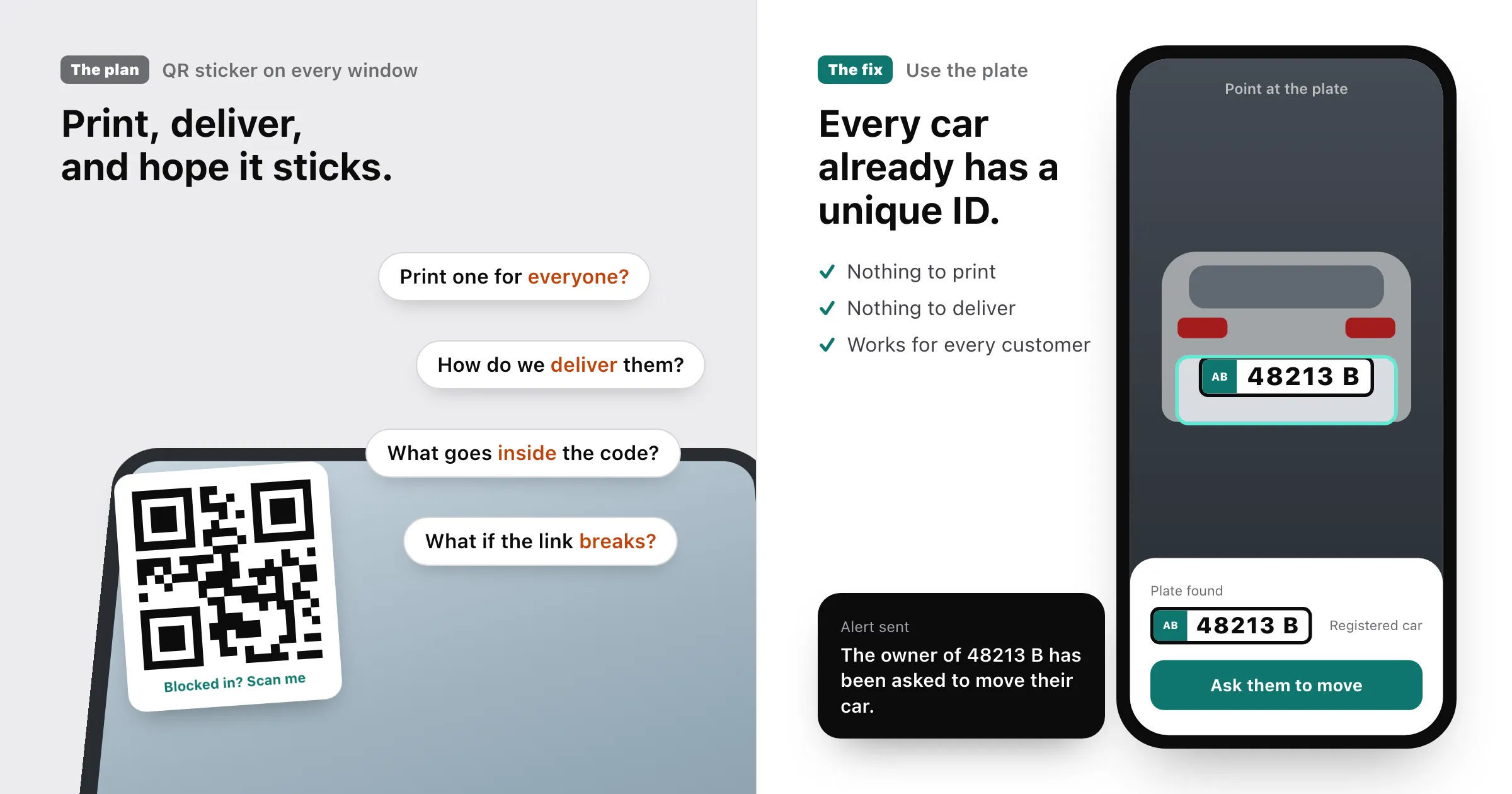
The team wanted QR stickers so people could alert a driver who blocked them in, and got stuck on printing and delivery. I showed them the plate on every car already does the job. Nothing to print, nothing to deliver, and the sticker budget went to something people keep.
- Stickers to print
- None
- Links that can break
- None
- Who is covered
- Every customer
- My role
- Challenge and advise
The problem
Double parking is part of daily life in the region. Someone comes back to their car, finds it blocked in, and has no way to reach the other driver.
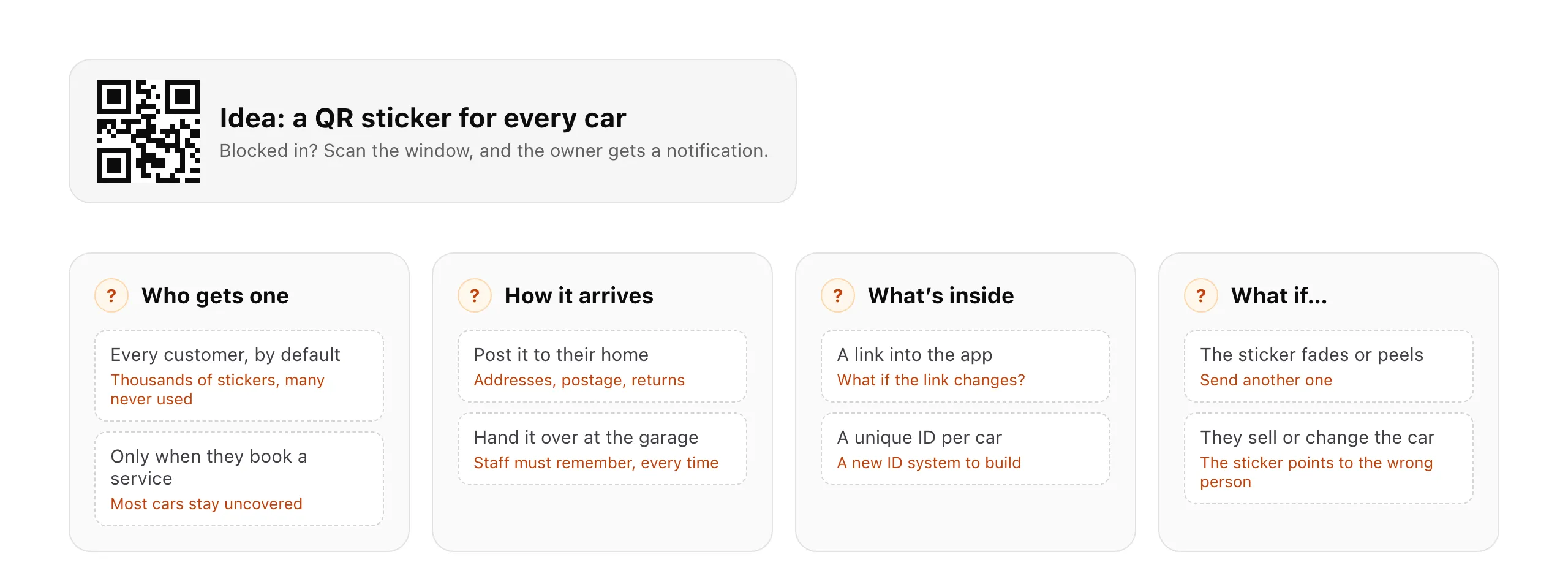
The company runs an app for car services, so they wanted to help: print a QR code for customers to stick on their window. Someone who is blocked in scans it, and the owner gets a notification.
Then the questions piled up. Do all customers get one, or only those who book a service? How do we deliver them? What goes inside the code, a link to the app with an ID? The team was stuck before they had built anything.
The question I asked
“Why a QR code, exactly?”
| Their reason | What I said |
|---|---|
| It can link straight into the app. | People who need to send an alert open the app anyway. Nothing needs to be linked. |
| It gives each car a unique ID, so we know who to notify. | Every car already has a unique ID, bolted to the front and back: the plate. Customers have it on file for their bookings. |
| It’s a bit of marketing. | A sticker is weak marketing. Spend that budget on a car air freshener or a phone holder with the logo. People keep those and see them every day. |
How it works
- 1
Open the app
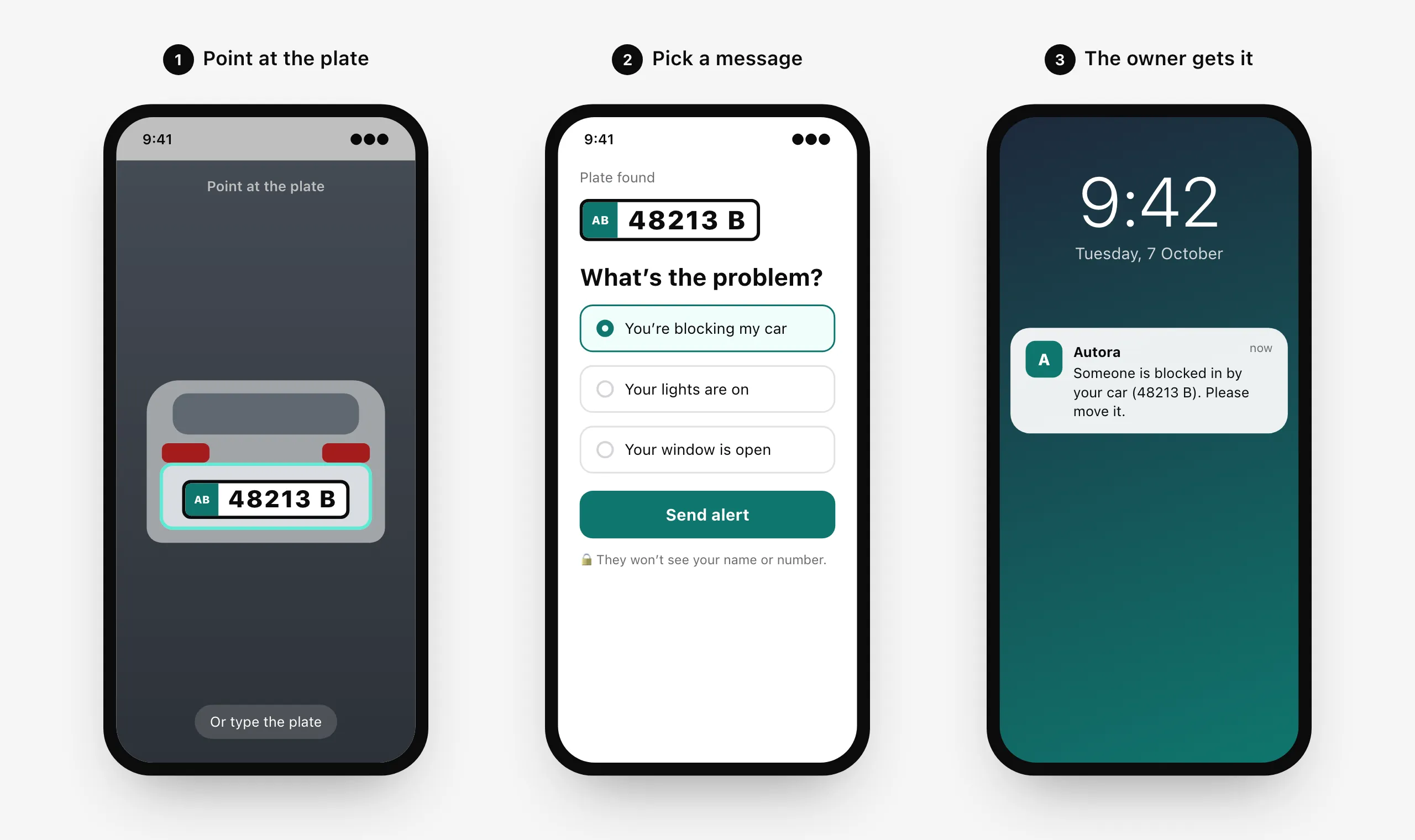
The blocked-in person opens the app and points the camera at the plate, or types it.
- 2
Find the car
The app matches the plate to a customer who already added that car.
- 3
Send the alert
The owner gets a ready-made message, like “You’re blocking a car. Please move it.”
- 4
Keep it private
Neither side sees the other’s name or number. The app only passes the message on.
QR sticker vs the plate
| Topic | QR sticker | Plate |
|---|---|---|
| Unique ID | A new code for every car | Already on every car |
| Printing and delivery | Needed, for every customer | None |
| Who is covered | Only cars with a sticker | Every customer with a car on file |
| Lost, faded or new car | Send a new sticker | Update the plate in the app |
| Links that break | Possible, and stuck on glass for years | Nothing to break |
| Marketing | A sticker on the window | Budget goes to useful branded items |
What to get right
- The sender needs the appA QR code could open a web page for anyone. Here, the person who is blocked in needs the app. For a car services app, that’s a reason to install it, not a cost.
- Stop misuseAnyone can read a plate, so limit how many alerts one person can send, allow ready-made messages only, and let people report abuse. Never share personal details.
- Plates must be rightAsk owners to confirm their plate when they add a car, so alerts reach the right person.
Under the hood: The plates the app already stored, a lookup from plate to customer, and the push notifications it already sends for bookings. The phone’s camera reads the plate, with typing as a fallback.
What I’d tell any team
- Before solving “how do we do X”, ask “why X”. The answers often point to something you already have.
- Physical things are slow and costly to change. Avoid printing what software can do.
- If a feature needs a budget to work, check whether it really does. If not, spend it where people will notice.
Screens are illustrations with a fictional brand and plate. The client is not named.