Case studyA property marketplace (anonymised)
From search filters to search by prompt
Users ignored the search filters, and the team thought smart search meant a rebuild. Instead, I gave an AI agent the search they already had. Working prototype in 2–3 days, live in 2 weeks.
- Prototype
- 2–3 days
- Live
- 2 weeks
- Rebuild
- None
- My role
- Idea and build
The problem
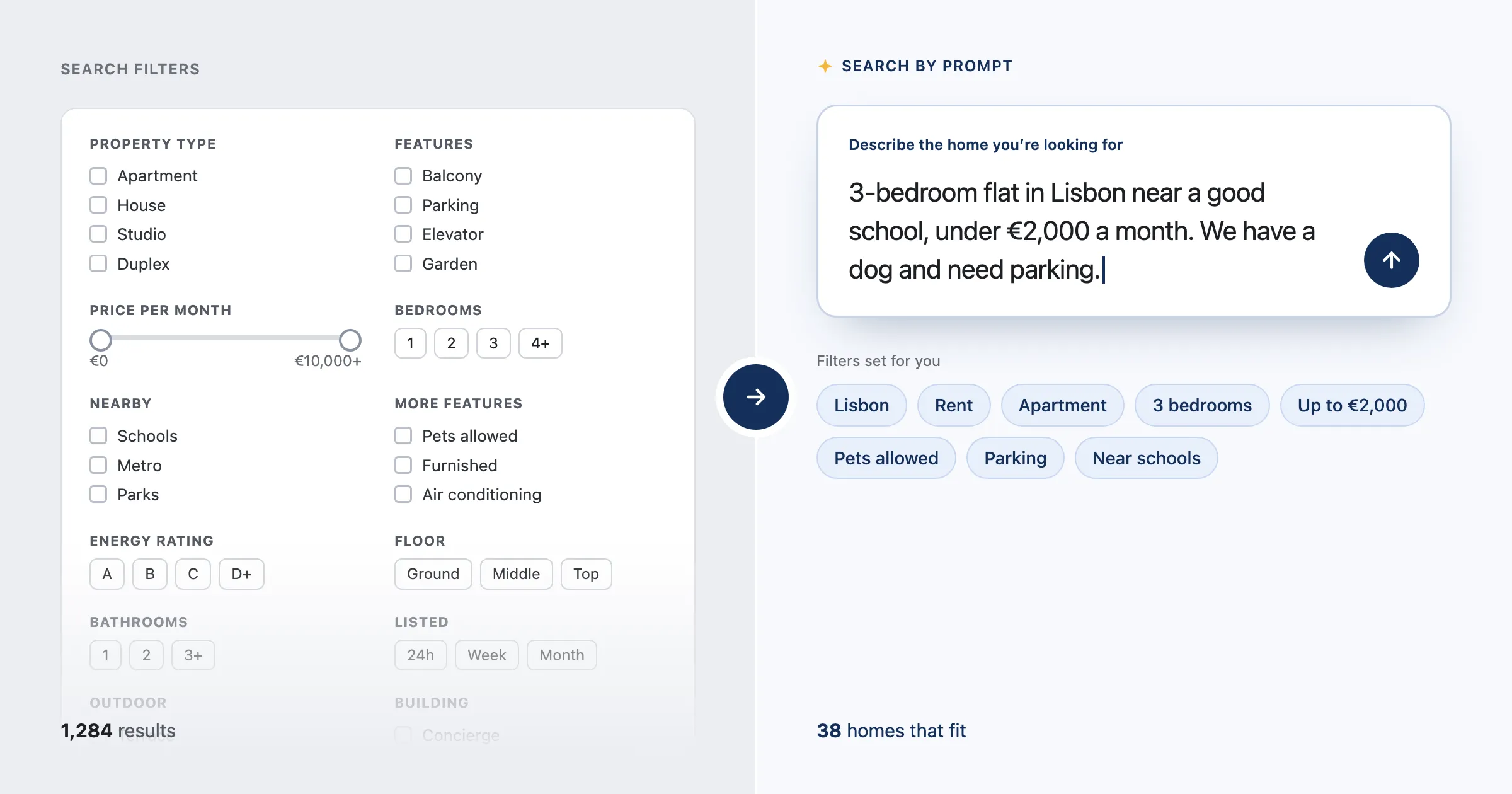
The search worked like most big booking and property sites: a location box, a few dropdowns, and a long column of filters on the left.
Most people typed a place, hit search, and scrolled. The filters that would have found them the right home went mostly unused.
The team knew search had to get smarter, but assumed it meant months of work on a new search system.
The insight
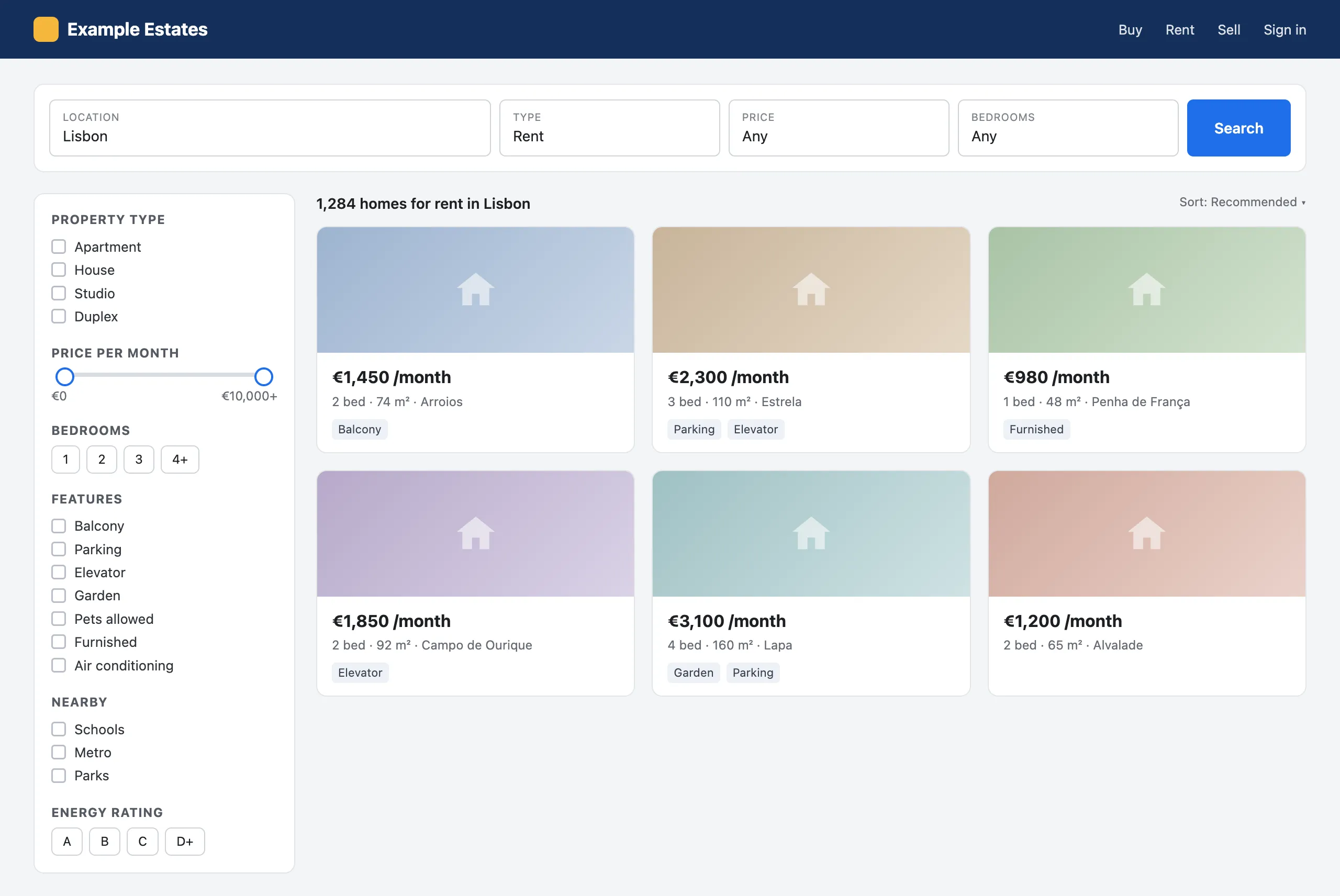
The search already knew every filter, and every possible value, for each location. That’s how the sidebar was built.
So the AI didn’t need a new search engine. It needed to know which filters exist, and permission to set them. We gave it the existing search functions as tools.
How it works
- 1
Describe it
The person writes what they want, in their own words.
- 2
Read the options
The AI asks the existing search which filters exist for that place.
- 3
Set the filters
It picks the values that match the request and runs the normal search.
- 4
Show the results
Results appear on the same page, with the filters visible so people can adjust them.
One sentence, eight filters
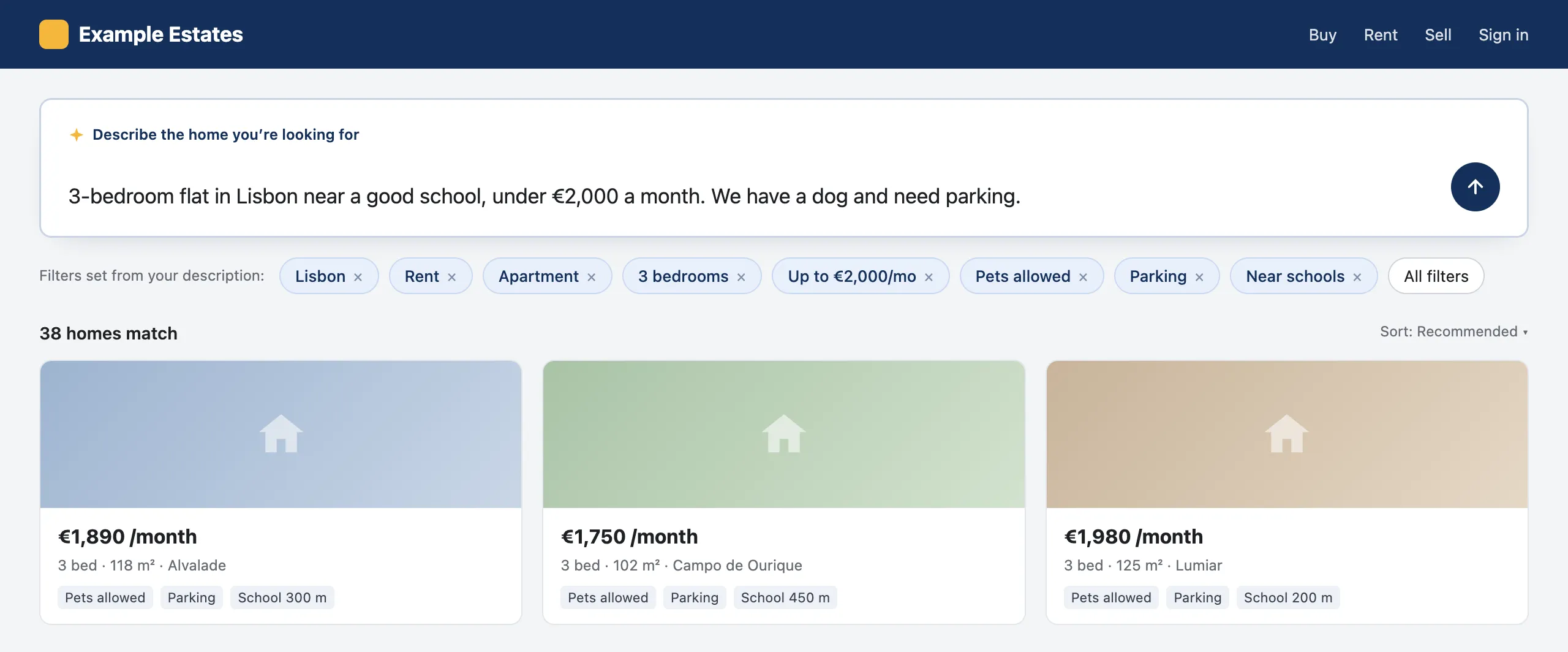
“3-bedroom flat in Lisbon near a good school, under €2,000 a month. We have a dog and need parking.”
| They said | Filter | Value |
|---|---|---|
| “Lisbon” | Location | Lisbon |
| “a month” | Type | Rent |
| “flat” | Property type | Apartment |
| “3-bedroom” | Bedrooms | 3 |
| “under €2,000” | Max price | €2,000 / month |
| “We have a dog” | Features | Pets allowed |
| “need parking” | Features | Parking |
| “near a good school” | Nearby | Schools |
From idea to live
- Day 1The idea: the filters already exist, so let the AI use them.
- Days 2–3Working prototype, connected to the real search.
- Week 2Live for users, with the classic filters still there.
Under the hood: The existing search API, which already returned the filters and values for each location, wrapped as tools for a LangChain agent. No new search engine and no data migration.
What I’d tell any team
- Being AI-ready rarely starts with a rebuild. Often the pieces are already there.
- Keep the old way working. AI fills in the filters, and people can still change them.
- Ship a prototype in days, then decide. It’s cheaper than a planning cycle.
Next step: The same tools can be exposed over MCP, so assistants like ChatGPT and Claude can search the platform directly.
Screens are illustrations with a fictional brand. The client is not named.